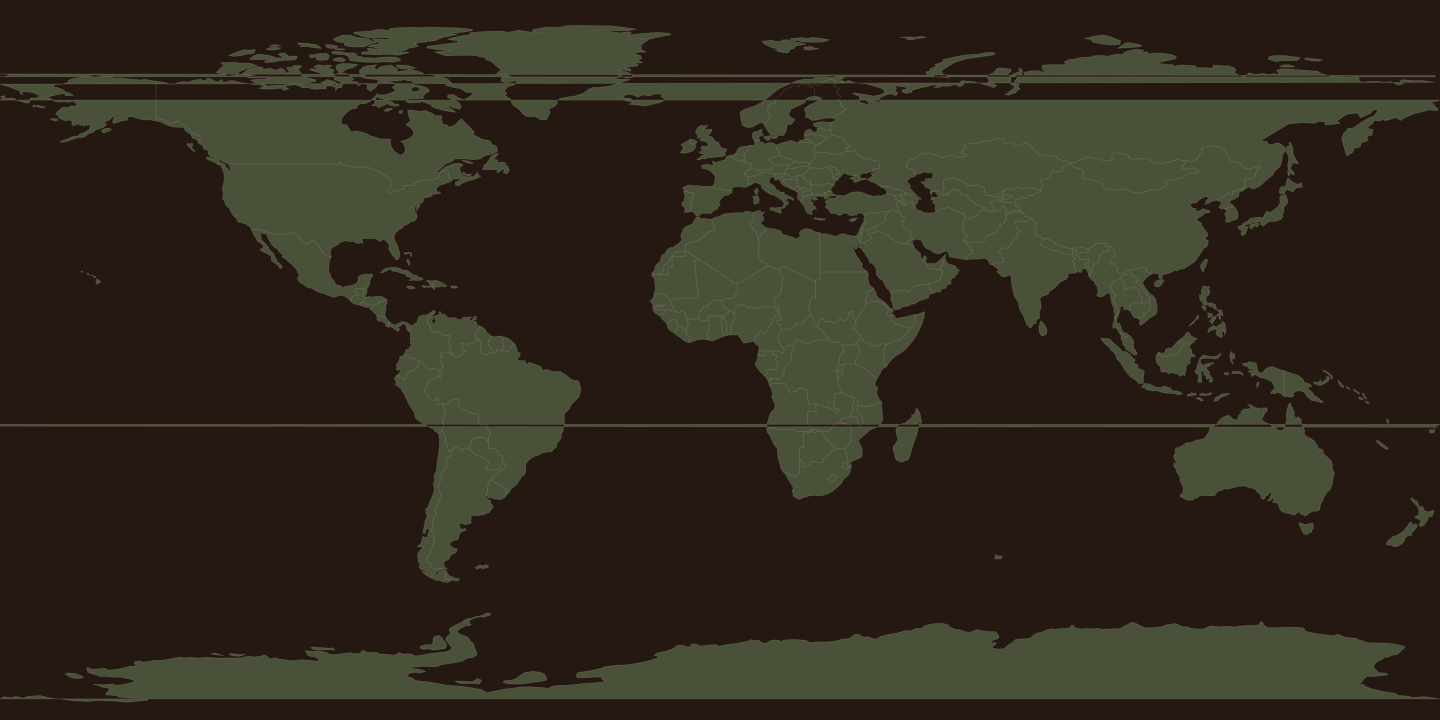
A qualitative orientation, not a live production ranking.
Origin field file / Latin America← All origins
Ecuador
Nacional heritage, productive hybrids and immense regional diversity make simple genetic romance impossible.
floralcitrus peelcocoa
- Côte d’Ivoire — West Africa, Forest zone, at approximately 7.5° north and 5.5° west.
- Ghana — West Africa, Ashanti, Western North & Ahafo, at approximately 7.8° north and 1.0° west.
- Ecuador — Latin America, Esmeraldas, Manabí, Los Ríos & Guayas, at approximately 1.4° south and 78.2° west.
- Peru — Latin America, Amazonas, San Martín, Piura & Cusco, at approximately 9.2° south and 75.0° west.
- Venezuela — Latin America, Sur del Lago, Paria, Ocumare & Chuao, at approximately 7.0° north and 66.6° west.
- Dominican Republic — Caribbean, Cibao, Duarte & Sánchez Ramírez, at approximately 19.0° north and 70.2° west.
- Madagascar — East Africa, Sambirano Valley, at approximately 14.5° south and 47.0° east.
- Brazil — Latin America, Bahia & Pará, at approximately 10.0° south and 50.0° west.
- Indonesia — Southeast Asia, Sulawesi, Sumatra & Bali, at approximately 2.0° south and 119.0° east.
- India — India, Andhra Pradesh, Karnataka, Kerala & Tamil Nadu, at approximately 12.0° north and 77.5° east.
- Nigeria — West Africa, Ondo, Cross River & Osun, at approximately 9.0° north and 8.0° east.
- Cameroon — West Africa, Centre, South & Littoral, at approximately 6.0° north and 12.0° east.
- Papua New Guinea — Oceania, East New Britain & Bougainville, at approximately 6.0° south and 147.0° east.
- Belize — Latin America, Toledo District, at approximately 17.2° north and 88.7° west.
- Tanzania — East Africa, Mbeya, Morogoro & Kyela, at approximately 7.0° south and 35.0° east.
Atlas originBand is climatic orientation, not a biological border
Windows vary by region, weather and crop cycle.
System labels describe patterns, not every farm.
Each pressure requires its own evidence and response.
How to read this fileCountry is context,
Country is context,
never destiny.
Ecuador is both a large producer and a reference point in fine-flavor chocolate. Nacional-linked histories, floral associations and named regions attract attention, while productive material such as CCN-51 complicates any tidy old-versus-new story.
A label that says Arriba, Nacional or Ecuador should begin inquiry rather than end it. Ask for region, supplier, genetic evidence where relevant, fermentation design and what the maker actually tasted in the lot.
Four forces to keep in frame.
Genetic language
Nacional, hybrids and mixed plantings coexist; prestigious vocabulary can be used more broadly than evidence supports.
Regions
Esmeraldas, Manabí, Los Ríos, Guayas and Amazonian areas differ in ecology and market access.
Flavor work
Floral, citrus and cocoa signals can be preserved, muted or redirected by fermentation and roast.
Conservation
Genetic diversity and agroforestry value depend on farmer incentives, not only on collector interest.
Sensory prompts—not promises
orange blossom · citrus peel · cocoa · tropical fruit
These associations can help build a flight. They cannot authenticate origin, genetics or quality. Taste blind when possible and record the roast, recipe and serving conditions.
Start a Ecuador tasting ↗Keep the caveats visible
— Nacional is not a universal purity claim.
— CCN-51 is not automatically low quality.
— Arriba is used inconsistently in the market.
Turn romance into evidence.
- 01What is the geographic scale?
- 02Is the genetic claim documented?
- 03Was the lot centrally fermented?
- 04How are farmers paid for separation or quality?