Straight answers,
with the evidence attached.
Direct, source-backed answers to the questions people actually ask about chocolate: bloom, storage, fermentation and what single-origin does and does not prove.
Four questions, answered in full
Each guide opens with the short answer, works through the mechanism, gives you a table to keep beside the wrapper, and lists every source it used with its review date.
Chocolate bloom: safe, stale or spoiled?
White streaks or a dusty surface on chocolate are often fat bloom or sugar bloom. They usually signal a texture and storage defect, but appearance alone cannot rule out contamination.
Open the guide ↗Storage / Practice · 8 minute readHow to store chocolate: stable, sealed, odor-free.
Store chocolate in a cool, dry, dark place with a stable temperature and a tight barrier against humidity and odors. Refrigerate only when the room makes careful cupboard storage impossible.
Open the guide ↗Origin / Buying · 10 minute readSingle-origin chocolate: place without mythology.
Single-origin chocolate uses cacao attributed to a defined place, but the size of that place and the evidence behind the claim vary. Origin can guide comparison; it cannot guarantee flavor, quality or ethics.
Open the guide ↗Post-harvest / Microbiology · 11 minute readCacao fermentation: how flavor begins.
Cacao fermentation is a managed microbial succession around fresh seeds. It removes pulp, kills the seed and creates precursors that roasting can later turn into recognizable chocolate aroma.
Open the guide ↗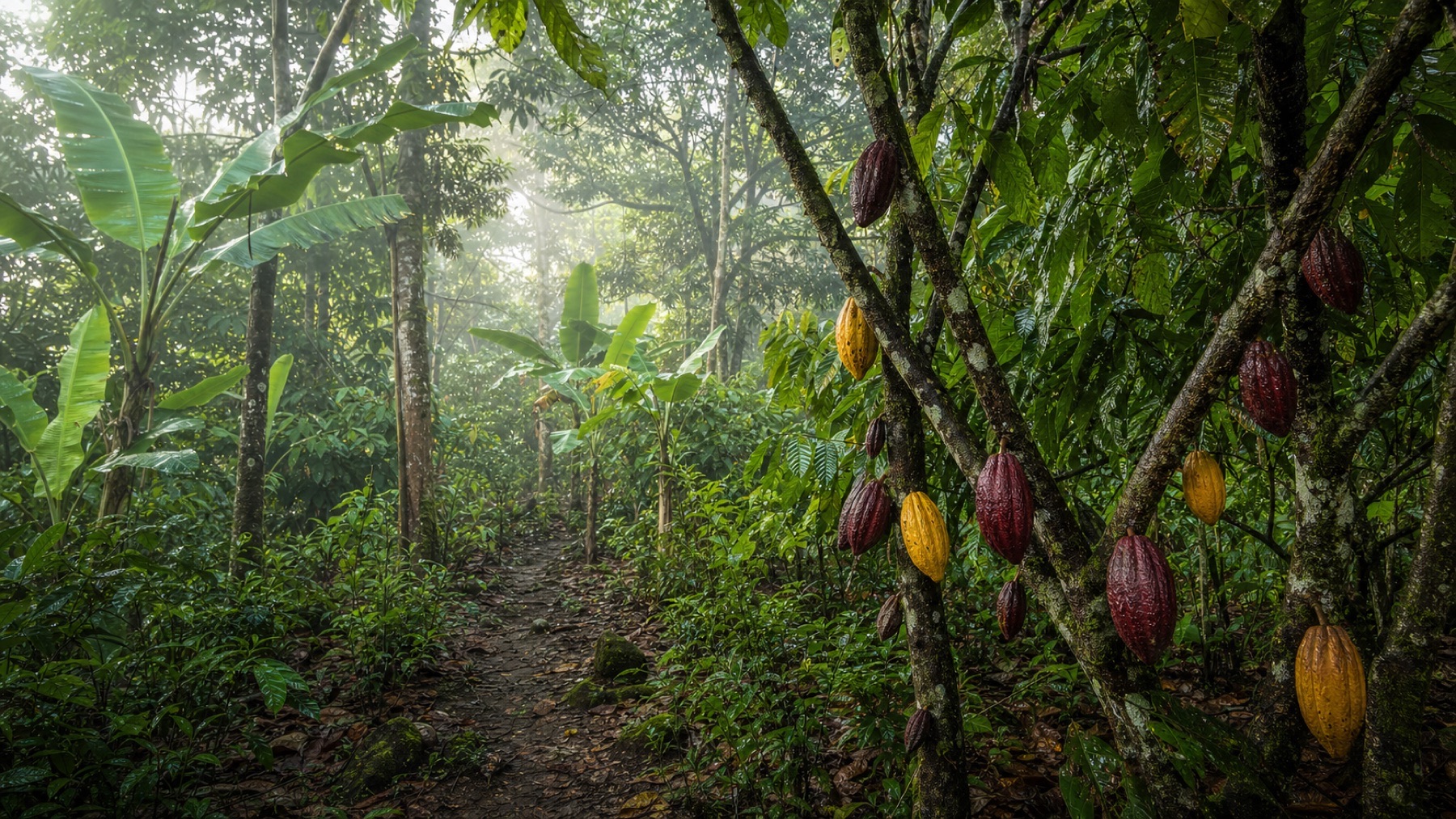
A guide should be usable in a shop aisle and checkable at a desk. Editorial image; interpretive, not documentary evidence.