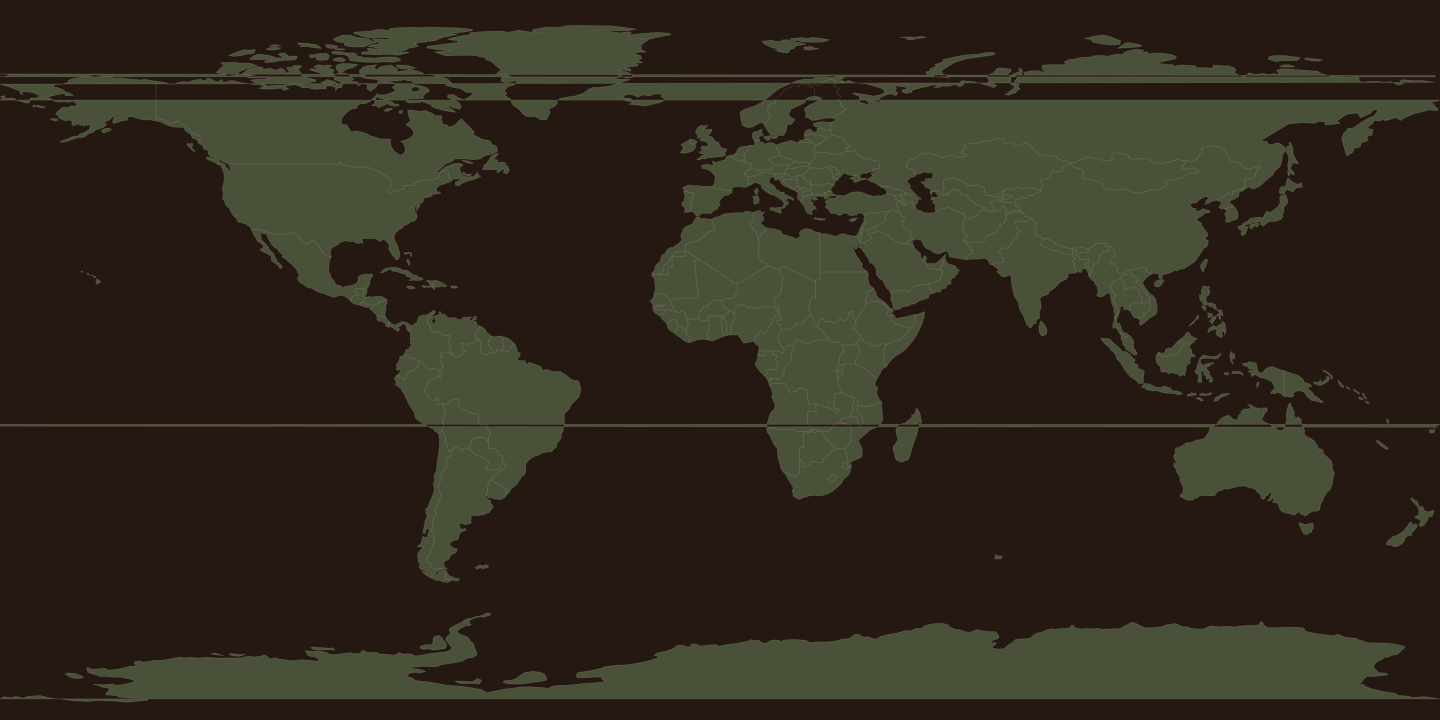
A qualitative orientation, not a live production ranking.
Origin field file / Latin America← All origins
Brazil
Recovery from disease, Amazonian diversity and Bahia’s cabruca systems connect flavor to living landscapes.
brown fruitnutswarm spice
- Côte d’Ivoire — West Africa, Forest zone, at approximately 7.5° north and 5.5° west.
- Ghana — West Africa, Ashanti, Western North & Ahafo, at approximately 7.8° north and 1.0° west.
- Ecuador — Latin America, Esmeraldas, Manabí, Los Ríos & Guayas, at approximately 1.4° south and 78.2° west.
- Peru — Latin America, Amazonas, San Martín, Piura & Cusco, at approximately 9.2° south and 75.0° west.
- Venezuela — Latin America, Sur del Lago, Paria, Ocumare & Chuao, at approximately 7.0° north and 66.6° west.
- Dominican Republic — Caribbean, Cibao, Duarte & Sánchez Ramírez, at approximately 19.0° north and 70.2° west.
- Madagascar — East Africa, Sambirano Valley, at approximately 14.5° south and 47.0° east.
- Brazil — Latin America, Bahia & Pará, at approximately 10.0° south and 50.0° west.
- Indonesia — Southeast Asia, Sulawesi, Sumatra & Bali, at approximately 2.0° south and 119.0° east.
- India — India, Andhra Pradesh, Karnataka, Kerala & Tamil Nadu, at approximately 12.0° north and 77.5° east.
- Nigeria — West Africa, Ondo, Cross River & Osun, at approximately 9.0° north and 8.0° east.
- Cameroon — West Africa, Centre, South & Littoral, at approximately 6.0° north and 12.0° east.
- Papua New Guinea — Oceania, East New Britain & Bougainville, at approximately 6.0° south and 147.0° east.
- Belize — Latin America, Toledo District, at approximately 17.2° north and 88.7° west.
- Tanzania — East Africa, Mbeya, Morogoro & Kyela, at approximately 7.0° south and 35.0° east.
Atlas originBand is climatic orientation, not a biological border
Windows vary by region, weather and crop cycle.
System labels describe patterns, not every farm.
Each pressure requires its own evidence and response.
How to read this fileCountry is context,
Country is context,
never destiny.
Brazil’s cacao story includes large historical production, the devastation of witches’ broom disease in Bahia, recovery, growing domestic craft chocolate and expanding attention to Pará and other Amazonian regions.
Cabruca—cacao cultivated beneath a thinned Atlantic Forest canopy—can retain tree cover and habitat features, but one system name does not establish biodiversity outcomes. Farm management, landscape context and economic viability determine what it sustains.
Four forces to keep in frame.
Bahia
Disease history, cabruca landscapes and renewed quality work shape current identity.
Pará and Amazonia
Diverse systems connect cacao with the crop’s deeper Amazonian history and contemporary expansion questions.
Domestic making
A strong producing-country craft scene can keep more sensory interpretation and value closer to origin.
Agroforestry
Tree cover, species composition, land-use history and farmer income all determine real outcomes.
Sensory prompts—not promises
brown fruit · nuts · cocoa · warm spice
These associations can help build a flight. They cannot authenticate origin, genetics or quality. Taste blind when possible and record the roast, recipe and serving conditions.
Start a Brazil tasting ↗Keep the caveats visible
— Cabruca is not an automatic biodiversity certificate.
— National notes hide two vast biomes.
— Recovery narratives should include farmer economics.
Turn romance into evidence.
- 01Which state and landscape?
- 02Is this farm-grown and locally made?
- 03How is disease managed?
- 04What ecological measurements support the claim?