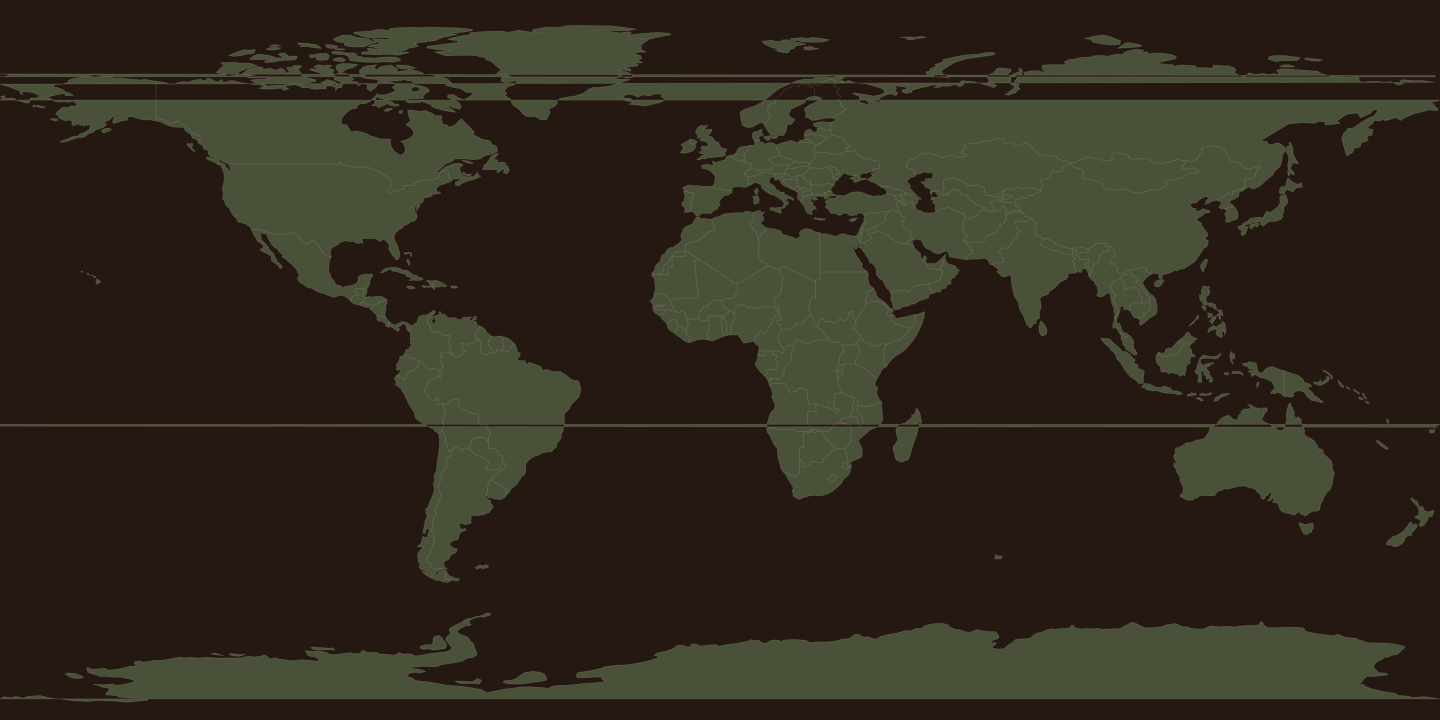
A qualitative orientation, not a live production ranking.
Origin field file / Latin America← All origins
Venezuela
Celebrated regional names show how reputation, scarcity, genetics and difficult logistics can become entangled.
delicate nutscarameldried fruit
- Côte d’Ivoire — West Africa, Forest zone, at approximately 7.5° north and 5.5° west.
- Ghana — West Africa, Ashanti, Western North & Ahafo, at approximately 7.8° north and 1.0° west.
- Ecuador — Latin America, Esmeraldas, Manabí, Los Ríos & Guayas, at approximately 1.4° south and 78.2° west.
- Peru — Latin America, Amazonas, San Martín, Piura & Cusco, at approximately 9.2° south and 75.0° west.
- Venezuela — Latin America, Sur del Lago, Paria, Ocumare & Chuao, at approximately 7.0° north and 66.6° west.
- Dominican Republic — Caribbean, Cibao, Duarte & Sánchez Ramírez, at approximately 19.0° north and 70.2° west.
- Madagascar — East Africa, Sambirano Valley, at approximately 14.5° south and 47.0° east.
- Brazil — Latin America, Bahia & Pará, at approximately 10.0° south and 50.0° west.
- Indonesia — Southeast Asia, Sulawesi, Sumatra & Bali, at approximately 2.0° south and 119.0° east.
- India — India, Andhra Pradesh, Karnataka, Kerala & Tamil Nadu, at approximately 12.0° north and 77.5° east.
- Nigeria — West Africa, Ondo, Cross River & Osun, at approximately 9.0° north and 8.0° east.
- Cameroon — West Africa, Centre, South & Littoral, at approximately 6.0° north and 12.0° east.
- Papua New Guinea — Oceania, East New Britain & Bougainville, at approximately 6.0° south and 147.0° east.
- Belize — Latin America, Toledo District, at approximately 17.2° north and 88.7° west.
- Tanzania — East Africa, Mbeya, Morogoro & Kyela, at approximately 7.0° south and 35.0° east.
Atlas originBand is climatic orientation, not a biological border
Windows vary by region, weather and crop cycle.
System labels describe patterns, not every farm.
Each pressure requires its own evidence and response.
How to read this fileCountry is context,
Country is context,
never destiny.
Venezuela has long held an outsized place in fine-cacao imagination. Chuao, Sur del Lago, Ocumare and Paria appear in historical and contemporary trade language, often beside Criollo-associated claims.
Reputation can preserve knowledge and command value, but it can also encourage vague provenance. Political and logistical difficulty, small volumes and mixed planting material make documentation and current harvest context especially important.
Four forces to keep in frame.
Regional names
Names may identify valleys, ports, communities, planting material or trade traditions; clarify which meaning applies.
Genetics
Criollo-associated material and extensive mixing coexist; sensory delicacy cannot authenticate a genotype.
Post-harvest
Small community or estate systems can create distinctive lots, but practices and continuity vary.
Logistics
Export difficulty and scarcity can increase price without guaranteeing freshness or traceability.
Sensory prompts—not promises
delicate nuts · caramel · dried fruit · gentle cocoa
These associations can help build a flight. They cannot authenticate origin, genetics or quality. Taste blind when possible and record the roast, recipe and serving conditions.
Start a Venezuela tasting ↗Keep the caveats visible
— Prestige is not provenance.
— Scarcity is not a sensory score.
— Historic reputation may not describe the current crop.
Turn romance into evidence.
- 01Who produced and fermented this harvest?
- 02What year was it harvested?
- 03What does the regional name mean here?
- 04How was storage managed?