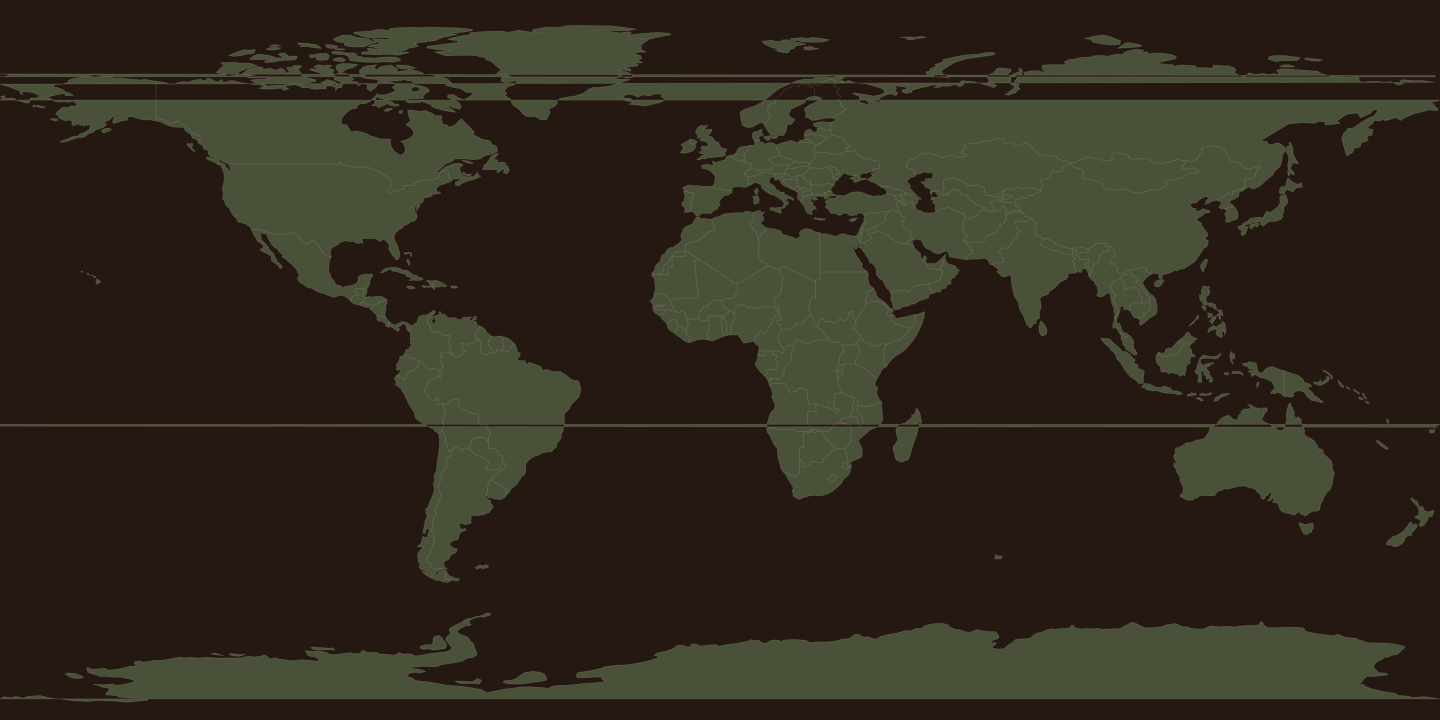
A qualitative orientation, not a live production ranking.
Origin field file / Southeast Asia← All origins
Indonesia
A major Asian origin where fermentation incentives, pests and farm renewal explain more than an earthy stereotype.
warm spicetobaccodark fruit
- Côte d’Ivoire — West Africa, Forest zone, at approximately 7.5° north and 5.5° west.
- Ghana — West Africa, Ashanti, Western North & Ahafo, at approximately 7.8° north and 1.0° west.
- Ecuador — Latin America, Esmeraldas, Manabí, Los Ríos & Guayas, at approximately 1.4° south and 78.2° west.
- Peru — Latin America, Amazonas, San Martín, Piura & Cusco, at approximately 9.2° south and 75.0° west.
- Venezuela — Latin America, Sur del Lago, Paria, Ocumare & Chuao, at approximately 7.0° north and 66.6° west.
- Dominican Republic — Caribbean, Cibao, Duarte & Sánchez Ramírez, at approximately 19.0° north and 70.2° west.
- Madagascar — East Africa, Sambirano Valley, at approximately 14.5° south and 47.0° east.
- Brazil — Latin America, Bahia & Pará, at approximately 10.0° south and 50.0° west.
- Indonesia — Southeast Asia, Sulawesi, Sumatra & Bali, at approximately 2.0° south and 119.0° east.
- India — India, Andhra Pradesh, Karnataka, Kerala & Tamil Nadu, at approximately 12.0° north and 77.5° east.
- Nigeria — West Africa, Ondo, Cross River & Osun, at approximately 9.0° north and 8.0° east.
- Cameroon — West Africa, Centre, South & Littoral, at approximately 6.0° north and 12.0° east.
- Papua New Guinea — Oceania, East New Britain & Bougainville, at approximately 6.0° south and 147.0° east.
- Belize — Latin America, Toledo District, at approximately 17.2° north and 88.7° west.
- Tanzania — East Africa, Mbeya, Morogoro & Kyela, at approximately 7.0° south and 35.0° east.
Atlas originBand is climatic orientation, not a biological border
Windows vary by region, weather and crop cycle.
System labels describe patterns, not every farm.
Each pressure requires its own evidence and response.
How to read this fileCountry is context,
Country is context,
never destiny.
Indonesia has been a major cocoa producer, especially in Sulawesi and Sumatra. Trade has often included lightly fermented or unfermented beans, reflecting market incentives and rapid-cash needs rather than an inability to produce quality.
Careful fermentation and sorting reveal a wider sensory range. The origin is especially useful for learning that quality systems must pay for time, labor, yield loss and separation—not merely request better beans.
Four forces to keep in frame.
Fermentation economics
Selling wet or quickly dried beans can reduce delay and risk for farmers; quality programs must address that trade-off.
Farm health
Pests, disease, aging trees and declining yields affect willingness to invest in post-harvest work.
Geography
Sulawesi, Sumatra, Bali and other islands are not one agricultural system.
Smoke and earth
Some famous notes may reflect drying, storage or roast as much as place.
Sensory prompts—not promises
warm spice · tobacco · earth · dark fruit
These associations can help build a flight. They cannot authenticate origin, genetics or quality. Taste blind when possible and record the roast, recipe and serving conditions.
Start a Indonesia tasting ↗Keep the caveats visible
— Earthy is not a national destiny.
— Low fermentation can be an incentive problem.
— Island-level provenance matters.
Turn romance into evidence.
- 01Who carries the cost of fermentation?
- 02Which island and district?
- 03Was smoke exposure controlled?
- 04Does the program support farm renewal?