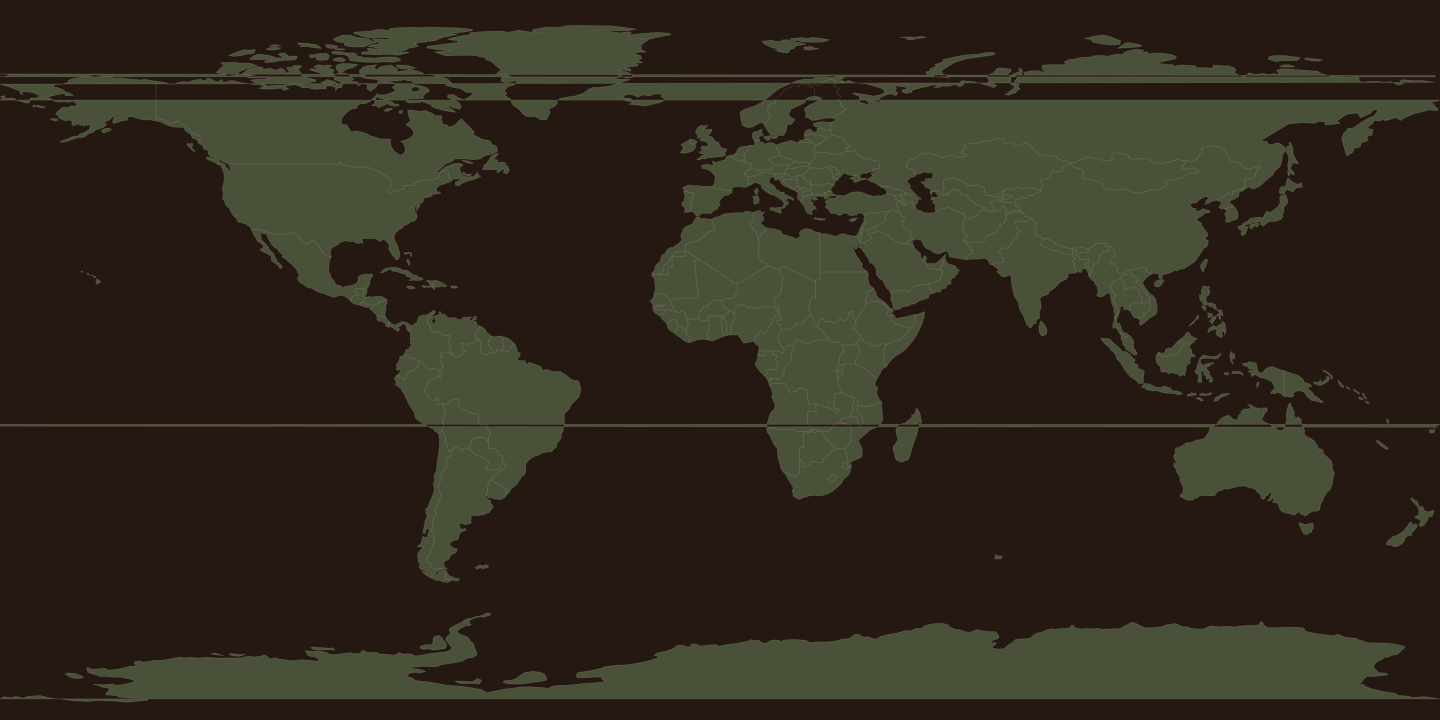
A qualitative orientation, not a live production ranking.
Origin field file / Oceania← All origins
Papua New Guinea
Remote logistics and wood-fired drying make process artifacts unusually visible in the cup—or bar.
tropical fruitred fruitsmoke
- Côte d’Ivoire — West Africa, Forest zone, at approximately 7.5° north and 5.5° west.
- Ghana — West Africa, Ashanti, Western North & Ahafo, at approximately 7.8° north and 1.0° west.
- Ecuador — Latin America, Esmeraldas, Manabí, Los Ríos & Guayas, at approximately 1.4° south and 78.2° west.
- Peru — Latin America, Amazonas, San Martín, Piura & Cusco, at approximately 9.2° south and 75.0° west.
- Venezuela — Latin America, Sur del Lago, Paria, Ocumare & Chuao, at approximately 7.0° north and 66.6° west.
- Dominican Republic — Caribbean, Cibao, Duarte & Sánchez Ramírez, at approximately 19.0° north and 70.2° west.
- Madagascar — East Africa, Sambirano Valley, at approximately 14.5° south and 47.0° east.
- Brazil — Latin America, Bahia & Pará, at approximately 10.0° south and 50.0° west.
- Indonesia — Southeast Asia, Sulawesi, Sumatra & Bali, at approximately 2.0° south and 119.0° east.
- India — India, Andhra Pradesh, Karnataka, Kerala & Tamil Nadu, at approximately 12.0° north and 77.5° east.
- Nigeria — West Africa, Ondo, Cross River & Osun, at approximately 9.0° north and 8.0° east.
- Cameroon — West Africa, Centre, South & Littoral, at approximately 6.0° north and 12.0° east.
- Papua New Guinea — Oceania, East New Britain & Bougainville, at approximately 6.0° south and 147.0° east.
- Belize — Latin America, Toledo District, at approximately 17.2° north and 88.7° west.
- Tanzania — East Africa, Mbeya, Morogoro & Kyela, at approximately 7.0° south and 35.0° east.
Atlas originBand is climatic orientation, not a biological border
Windows vary by region, weather and crop cycle.
System labels describe patterns, not every farm.
Each pressure requires its own evidence and response.
How to read this fileCountry is context,
Country is context,
never destiny.
Papua New Guinea produces smaller volumes with striking regional and process variation. East New Britain is prominent in fine-chocolate language, and smoky profiles have become both a recognizable signature and a quality debate.
Remote farms and wet weather can make clean drying difficult. A smoke-free lot therefore represents infrastructure, fuel design, training and buyer reward—not simply a different flavor preference.
Four forces to keep in frame.
Remoteness
Transport, communication and storage can determine whether a separated lot remains viable.
Drying design
Direct smoke contact can dominate delicate fruit; improved systems require capital and maintenance.
Regional identity
Island and province matter more than one national descriptor.
Market reward
Buyers must pay for the additional work and lower-risk drying they request.
Sensory prompts—not promises
tropical fruit · red fruit · smoke · spice
These associations can help build a flight. They cannot authenticate origin, genetics or quality. Taste blind when possible and record the roast, recipe and serving conditions.
Start a Papua New Guinea tasting ↗Keep the caveats visible
— Smoke is not inevitable terroir.
— Remote should not become exotic marketing.
— A clean lot may challenge the famous profile.
Turn romance into evidence.
- 01What drying system was used?
- 02Which province and harvest?
- 03How was the lot stored and shipped?
- 04Did the premium cover infrastructure?