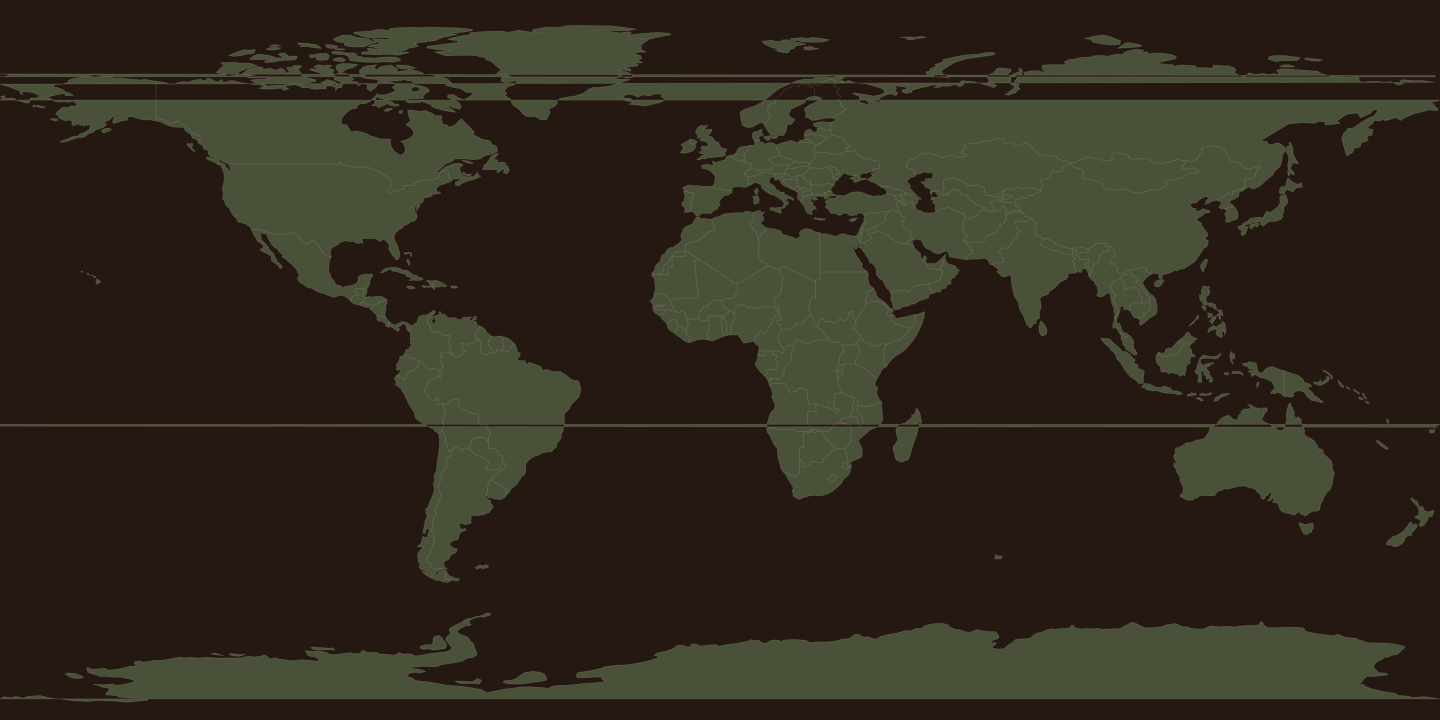
A qualitative orientation, not a live production ranking.
Origin field file / Caribbean← All origins
Dominican Republic
Trade grades make fermentation visible in an origin known for substantial organic-certified supply.
raisinbrown spicecocoa
- Côte d’Ivoire — West Africa, Forest zone, at approximately 7.5° north and 5.5° west.
- Ghana — West Africa, Ashanti, Western North & Ahafo, at approximately 7.8° north and 1.0° west.
- Ecuador — Latin America, Esmeraldas, Manabí, Los Ríos & Guayas, at approximately 1.4° south and 78.2° west.
- Peru — Latin America, Amazonas, San Martín, Piura & Cusco, at approximately 9.2° south and 75.0° west.
- Venezuela — Latin America, Sur del Lago, Paria, Ocumare & Chuao, at approximately 7.0° north and 66.6° west.
- Dominican Republic — Caribbean, Cibao, Duarte & Sánchez Ramírez, at approximately 19.0° north and 70.2° west.
- Madagascar — East Africa, Sambirano Valley, at approximately 14.5° south and 47.0° east.
- Brazil — Latin America, Bahia & Pará, at approximately 10.0° south and 50.0° west.
- Indonesia — Southeast Asia, Sulawesi, Sumatra & Bali, at approximately 2.0° south and 119.0° east.
- India — India, Andhra Pradesh, Karnataka, Kerala & Tamil Nadu, at approximately 12.0° north and 77.5° east.
- Nigeria — West Africa, Ondo, Cross River & Osun, at approximately 9.0° north and 8.0° east.
- Cameroon — West Africa, Centre, South & Littoral, at approximately 6.0° north and 12.0° east.
- Papua New Guinea — Oceania, East New Britain & Bougainville, at approximately 6.0° south and 147.0° east.
- Belize — Latin America, Toledo District, at approximately 17.2° north and 88.7° west.
- Tanzania — East Africa, Mbeya, Morogoro & Kyela, at approximately 7.0° south and 35.0° east.
Atlas originBand is climatic orientation, not a biological border
Windows vary by region, weather and crop cycle.
System labels describe patterns, not every farm.
Each pressure requires its own evidence and response.
How to read this fileCountry is context,
Country is context,
never destiny.
The Dominican Republic supplies both carefully fermented cocoa and less-fermented trade streams. Hispaniola commonly refers to fermented export cocoa, while Sanchez traditionally describes a less-fermented style, though real contracts and grades should be checked.
Cooperatives and centralized post-harvest can improve consistency and traceability. Hurricane exposure and changing weather make infrastructure and household resilience part of the quality story.
Four forces to keep in frame.
Trade language
Hispaniola and Sanchez reveal post-harvest categories more directly than a generic country flavor note.
Cooperatives
Aggregation can support central fermentation, organic systems and market access while still requiring transparent governance.
Organic
Certification addresses a defined production standard; it is not a complete labor, income or climate claim.
Weather
Storms can damage trees, roads and drying infrastructure, affecting several seasons.
Sensory prompts—not promises
raisin · brown spice · cocoa · tobacco
These associations can help build a flight. They cannot authenticate origin, genetics or quality. Taste blind when possible and record the roast, recipe and serving conditions.
Start a Dominican Republic tasting ↗Keep the caveats visible
— Organic is not a flavor descriptor.
— Fermentation grade matters.
— Island-wide language hides regional systems.
Turn romance into evidence.
- 01Is this Hispaniola or another grade?
- 02Who managed fermentation?
- 03How are cooperative services financed?
- 04What resilience measures support farms after storms?