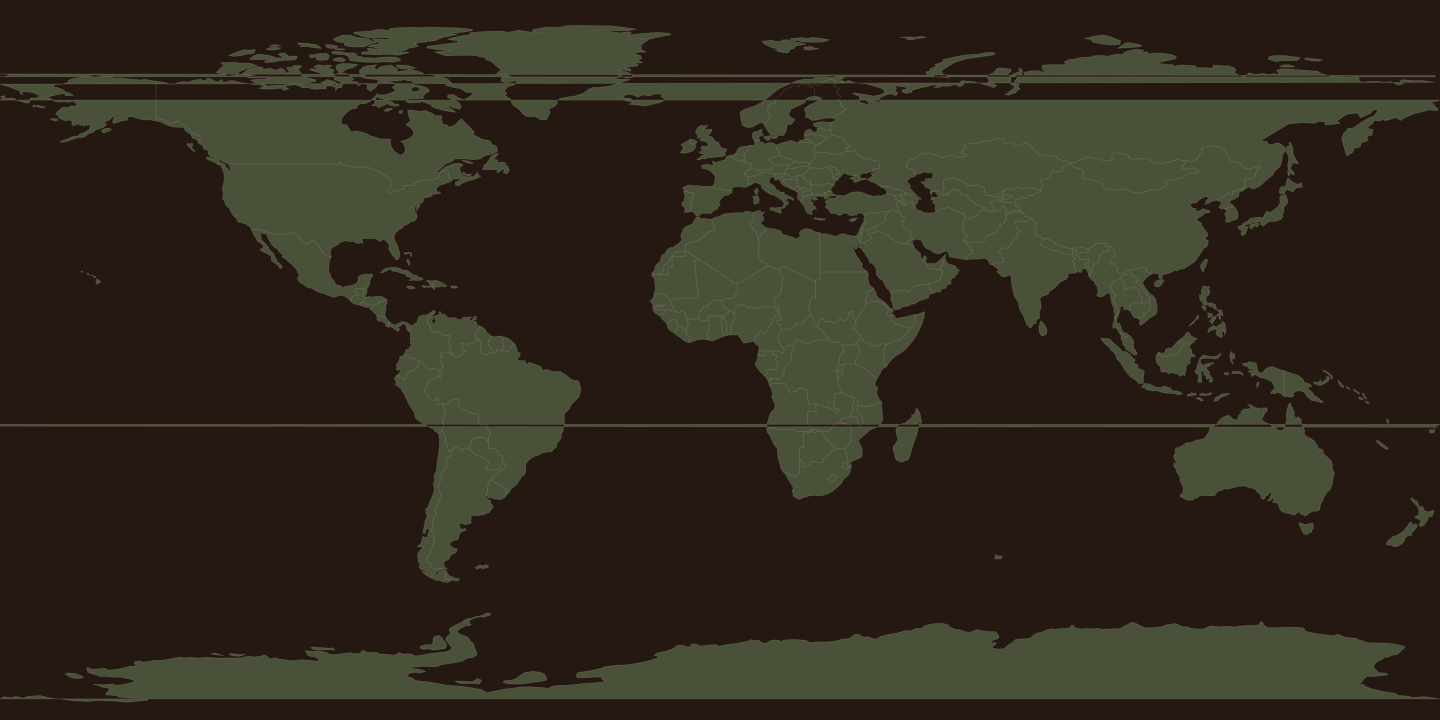
A qualitative orientation, not a live production ranking.
Origin field file / East Africa← All origins
Madagascar
Sambirano’s vivid reputation is a useful lesson in acidity, small-volume fame and the limits of origin shorthand.
red berrycitrusbright acidity
- Côte d’Ivoire — West Africa, Forest zone, at approximately 7.5° north and 5.5° west.
- Ghana — West Africa, Ashanti, Western North & Ahafo, at approximately 7.8° north and 1.0° west.
- Ecuador — Latin America, Esmeraldas, Manabí, Los Ríos & Guayas, at approximately 1.4° south and 78.2° west.
- Peru — Latin America, Amazonas, San Martín, Piura & Cusco, at approximately 9.2° south and 75.0° west.
- Venezuela — Latin America, Sur del Lago, Paria, Ocumare & Chuao, at approximately 7.0° north and 66.6° west.
- Dominican Republic — Caribbean, Cibao, Duarte & Sánchez Ramírez, at approximately 19.0° north and 70.2° west.
- Madagascar — East Africa, Sambirano Valley, at approximately 14.5° south and 47.0° east.
- Brazil — Latin America, Bahia & Pará, at approximately 10.0° south and 50.0° west.
- Indonesia — Southeast Asia, Sulawesi, Sumatra & Bali, at approximately 2.0° south and 119.0° east.
- India — India, Andhra Pradesh, Karnataka, Kerala & Tamil Nadu, at approximately 12.0° north and 77.5° east.
- Nigeria — West Africa, Ondo, Cross River & Osun, at approximately 9.0° north and 8.0° east.
- Cameroon — West Africa, Centre, South & Littoral, at approximately 6.0° north and 12.0° east.
- Papua New Guinea — Oceania, East New Britain & Bougainville, at approximately 6.0° south and 147.0° east.
- Belize — Latin America, Toledo District, at approximately 17.2° north and 88.7° west.
- Tanzania — East Africa, Mbeya, Morogoro & Kyela, at approximately 7.0° south and 35.0° east.
Atlas originBand is climatic orientation, not a biological border
Windows vary by region, weather and crop cycle.
System labels describe patterns, not every farm.
Each pressure requires its own evidence and response.
How to read this fileCountry is context,
Country is context,
never destiny.
Chocolate from Madagascar’s Sambirano Valley is often described through red berry, citrus and bright acidity. The association is strong enough to be educational—and strong enough to bias tasting before the bar reaches your mouth.
Genetics, fermentation, retained acidity, roast and recipe all contribute. Small national volume and premium market visibility do not automatically resolve household vulnerability or prove that every Madagascar lot tastes alike.
Four forces to keep in frame.
Geography
Much fine-chocolate visibility centers on the Sambirano Valley rather than the whole country.
Sensory structure
Fruit association can be supported by lively acidity; vinegary sharpness or imbalance remains a process question.
Genetics
Trinitario-associated language is common, but mixed populations and local selection complicate labels.
Value
High retail prices require a separate account of farmgate value and local processing.
Sensory prompts—not promises
red berry · citrus · yogurt-like acidity · light cocoa
These associations can help build a flight. They cannot authenticate origin, genetics or quality. Taste blind when possible and record the roast, recipe and serving conditions.
Start a Madagascar tasting ↗Keep the caveats visible
— Brightness is not always balance.
— Sambirano is not all Madagascar.
— Premium reputation does not prove equitable value.
Turn romance into evidence.
- 01Can I taste blind before reading notes?
- 02Which estate, cooperative or district?
- 03How was acidity managed in drying and roast?
- 04What share of value remains locally?