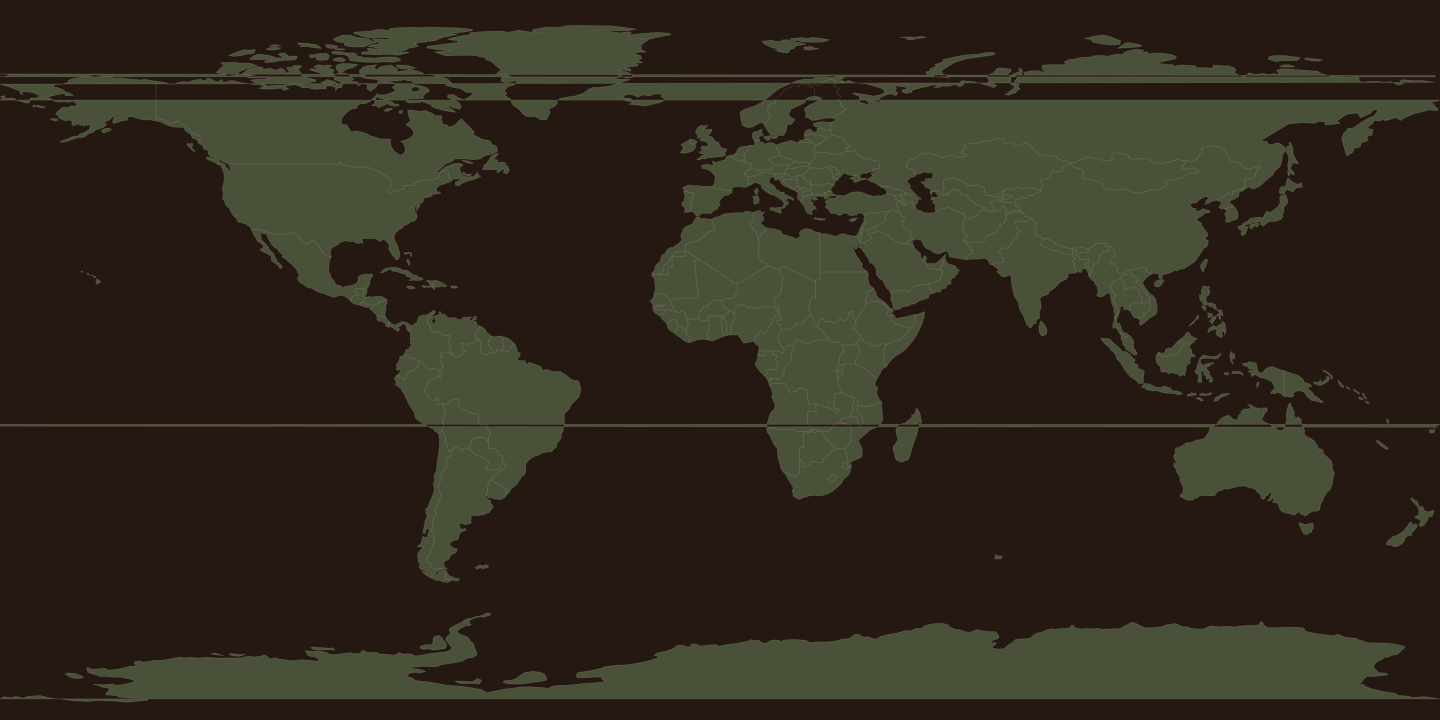
A qualitative orientation, not a live production ranking.
Origin field file / West Africa← All origins
Nigeria
Significant smallholder production, varied handling and infrastructure needs resist a generic West African profile.
cocoawoodroasted nuts
- Côte d’Ivoire — West Africa, Forest zone, at approximately 7.5° north and 5.5° west.
- Ghana — West Africa, Ashanti, Western North & Ahafo, at approximately 7.8° north and 1.0° west.
- Ecuador — Latin America, Esmeraldas, Manabí, Los Ríos & Guayas, at approximately 1.4° south and 78.2° west.
- Peru — Latin America, Amazonas, San Martín, Piura & Cusco, at approximately 9.2° south and 75.0° west.
- Venezuela — Latin America, Sur del Lago, Paria, Ocumare & Chuao, at approximately 7.0° north and 66.6° west.
- Dominican Republic — Caribbean, Cibao, Duarte & Sánchez Ramírez, at approximately 19.0° north and 70.2° west.
- Madagascar — East Africa, Sambirano Valley, at approximately 14.5° south and 47.0° east.
- Brazil — Latin America, Bahia & Pará, at approximately 10.0° south and 50.0° west.
- Indonesia — Southeast Asia, Sulawesi, Sumatra & Bali, at approximately 2.0° south and 119.0° east.
- India — India, Andhra Pradesh, Karnataka, Kerala & Tamil Nadu, at approximately 12.0° north and 77.5° east.
- Nigeria — West Africa, Ondo, Cross River & Osun, at approximately 9.0° north and 8.0° east.
- Cameroon — West Africa, Centre, South & Littoral, at approximately 6.0° north and 12.0° east.
- Papua New Guinea — Oceania, East New Britain & Bougainville, at approximately 6.0° south and 147.0° east.
- Belize — Latin America, Toledo District, at approximately 17.2° north and 88.7° west.
- Tanzania — East Africa, Mbeya, Morogoro & Kyela, at approximately 7.0° south and 35.0° east.
Atlas originBand is climatic orientation, not a biological border
Windows vary by region, weather and crop cycle.
System labels describe patterns, not every farm.
Each pressure requires its own evidence and response.
How to read this fileCountry is context,
Country is context,
never destiny.
Nigeria’s cocoa economy includes important production in Ondo, Cross River and other states. Farm and export systems differ from neighboring countries, so ‘West African cocoa’ should never substitute for country-specific context.
Quality can be constrained by aging farms, inconsistent fermentation, transport and storage, but those are investment and incentive questions rather than permanent characteristics of the beans.
Four forces to keep in frame.
Regions
Production spans different ecologies and local institutions; state-level context matters.
Post-harvest
Training, fermentation capacity, drying weather and buyer differentiation influence quality.
Infrastructure
Roads, storage and access to finance affect loss, timing and bargaining power.
Renewal
Tree rehabilitation and disease management require long planning horizons.
Sensory prompts—not promises
cocoa · wood · roasted nuts · dried fruit
These associations can help build a flight. They cannot authenticate origin, genetics or quality. Taste blind when possible and record the roast, recipe and serving conditions.
Start a Nigeria tasting ↗Keep the caveats visible
— Do not borrow Ghanaian or Ivorian assumptions.
— Infrastructure failures are not terroir.
— Country averages hide strong lots.
Turn romance into evidence.
- 01Which state and buying network?
- 02How is quality differentiated at purchase?
- 03Where are beans stored?
- 04What supports rehabilitation and farmer services?